1956–1981
Jack Harkness’s Early Life
His early life established the distance between his Cornish origins and the powerful, elusive businessman he became. The novel’s later revelations show that his future plans grew from a long-held sense that humanity was endangering the planet.
1 August 1970
Jory Fry’s Death
[Wynsum Fry](entity:character-recall-character-wynsum-fry-010bb456a7eb) saw Harkness cycling away from the cove and came to believe he had murdered her brother. Her conviction endured for decades, becoming a source of fear and conflict that would draw [Don](entity:character-recall-character-don-c375ff9c88e3) and [Blake](entity:character-recall-character-blake-2633f2688ac9) into the Frys’ history.
1981–1995
Furgler’s Heir Apparent
His relationship with Lenore gave him a route into the pharmaceutical industry and the influence he would later use to build a global company. He married [Mona Jackson](entity:character-recall-character-mona-jackson-1911f94dc68c), and the couple divided their lives among [Switzerland](entity:location-recall-location-6e6c25b1c44d), [London](entity:location-recall-location-1bfd335cdd1b), and Monte Carlo.
1995
Harkness Buys Furgler
The acquisition made Harkness the head of what became [Harkness Pharmaceuticals](entity:organization-recall-organization-harkness-pharmac-3de128b8ecdc). The origin of his money remained uncertain, laying the groundwork for suspicions about his finances and his association with people such as [Zlenko](entity:character-recall-character-zlenko-a74629261669).
1980s–2009
Harkness Builds a Pharmaceutical Empire
Harkness moved the company headquarters to [Zug](entity:location-recall-location-zug-2e0d81e84a8e) and channelled much of his personal salary through [Liechtenstein](entity:location-recall-location-01d8e610afd2), structuring his affairs to minimise taxes. He partnered with [Quintagler Industries](entity:organization-recall-organization-quintagler-indus-13ca60df01ed) in acquisitions that made his company an international powerhouse.
About seven years before the main story
Daisy’s Death and Blake’s Flight
Fearing Lee and the people around him, [Blake](entity:character-recall-character-blake-2633f2688ac9) left home with a passport she had secretly hidden. She travelled to [London](entity:location-recall-location-1bfd335cdd1b) and eventually made her way west, keeping her past to herself and building a life without reliable family ties.
June 1996
Jane Disappears
Her parents searched for her, and the family was left without an explanation. Holly, who had been among the last people to see Jane, could offer no account of why she vanished or where she went.
Easter 1996
Jane and Gareth’s Last Journey Together
The stop later became a clue to Jane’s hidden connection with Harkness’s pharmaceutical world. Afterward, Jane ended the relationship by leaving Gareth a note, then disappeared from her family’s life.
Before the main story
Holly’s Illness and Anonymous Treatment
The medication was paid for through a [London](entity:location-recall-location-1bfd335cdd1b) account named Nightingale at [Credit Suisse](entity:organization-recall-organization-credit-suisse-6ffe26430ceb). Holly’s recovery brought her into the orbit of investigators seeking Harkness’s missing funds, and the payments raised the possibility that Jane had somehow remained connected to her.
Before the main story, ending around Christmas
The Glasson Household
Andrew’s other daughter, [Muriel](entity:character-recall-character-muriel-e61f3db74863), objected to [Blake](entity:character-recall-character-blake-2633f2688ac9)’s presence and to her father’s contact with [Wynsum Fry](entity:character-recall-character-wynsum-fry-010bb456a7eb). After Christmas, Muriel insisted that Blake leave, and Andrew complied despite wanting her to stay.
From the late 1970s onward
Maris and the Fry Women
After Calensa apparently saw through her, Maris experienced a run of accidents and came to believe she had been cursed. She later made peace with Calensa, but the encounter left her convinced that Wynsum had inherited her grandmother’s ability to unsettle and control people.
After Christmas and before the opening
Blake Becomes Harkness’s House-Sitter
The house gave [Blake](entity:character-recall-character-blake-2633f2688ac9) a rare sense of safety and space. She knew little about its owner’s affairs and had not noticed the hidden room built into its structure.
Early June, opening days
Blake Sees Wynsum at the Cove
Back at [Wortalleth West](entity:location-recall-location-wortalleth-west-9a01296475ca), [Blake](entity:character-recall-character-blake-2633f2688ac9) found a king of spades pinned to the entrance gate. Wynsum used that card to mark Harkness as the [King of Spades](entity:expression-recall-expression-king-of-spades-1b8c0bfd92e6), and its appearance renewed Blake’s unease about the woman’s interest in the house.
Early June, shortly before the visit to Cornwall
Don Loses His Job
[Don](entity:character-recall-character-don-c375ff9c88e3) interpreted their meeting as an opportunity for easy money and a pleasant drive, not as the beginning of a dangerous investigation. His wish to avoid responsibility would be tested repeatedly by the people he encountered in [Cornwall](entity:location-recall-location-cornwall-5562c2fa740e).
Early June, the day Don arrives
The Valuation Assignment
Fran did not disclose at first that the house was tied to [Jack Harkness](entity:character-recall-character-jack-harkness-b97d53274c6a), whose extradition case and financial troubles were already attracting attention. [Don](entity:character-recall-character-don-c375ff9c88e3) accepted the assignment and drove from [London](entity:location-recall-location-1bfd335cdd1b) to [the Lizard](entity:location-recall-location-a256ccbb3298).
Early June, Don’s first afternoon at the house
Blake’s Naked Encounter with Don
[Blake](entity:character-recall-character-blake-2633f2688ac9) insisted that the owner was Harkness and that she was the housekeeper, while [Don](entity:character-recall-character-don-c375ff9c88e3)’s information named [Mona Jackson](entity:character-recall-character-mona-jackson-1911f94dc68c) as the owner. The proposed sale threatened the only home Blake felt she had, so she tried to win Don’s sympathy by bursting into tears.
Early June, Don’s first evening
The Sale and the Hidden Room
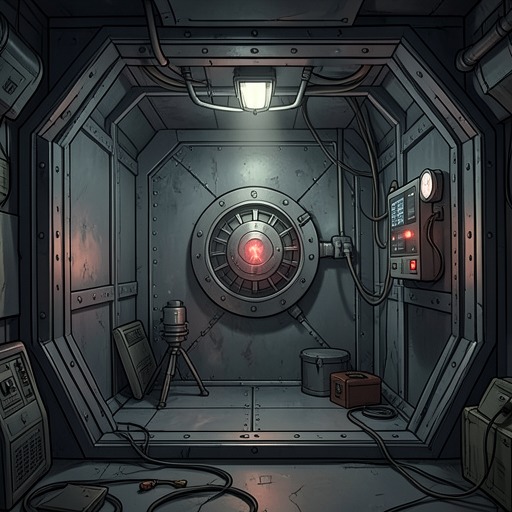
While measuring the rooms, [Don](entity:character-recall-character-don-c375ff9c88e3) noticed that the study and master-bedroom closet did not align. A mirror in the closet swung open to reveal a heavy steel door, apparently shut and locked from inside, concealing an unknown space.
Early June, the same evening
Blake Asks Don to Stay
[Blake](entity:character-recall-character-blake-2633f2688ac9) used the prospect of leaving to encourage [Don](entity:character-recall-character-don-c375ff9c88e3) to help her, while Don found himself unwilling to force her out. Their tentative trust began to compete with the professional arrangement Fran had made.
The first night at Wortalleth West
A Stranger Searches the House
Neither [Don](entity:character-recall-character-don-c375ff9c88e3) nor [Blake](entity:character-recall-character-blake-2633f2688ac9) knew that an intruder had been inside. The search established that Harkness’s property had attracted people seeking something hidden, and it turned the closed steel door into a more urgent mystery.
The morning after Don’s first night
Don Meets Amos French
French threatened to approach [Blake](entity:character-recall-character-blake-2633f2688ac9) and Fran directly if [Don](entity:character-recall-character-don-c375ff9c88e3) refused. Don concealed the warning from Blake and understood that his seemingly harmless estate assignment had placed him between powerful and dangerous interests.
The morning after Don meets French
The Hidden Room’s Technical Puzzle
[Dale](entity:character-recall-character-dale-fff2558efe87) could not determine whether the steel barrier hid a functioning secure room or something else. He warned that opening it might require heavy equipment, leaving [Blake](entity:character-recall-character-blake-2633f2688ac9) more frightened that someone could be concealed behind the door.
Later that day
French Interrogates Dale
[Dale](entity:character-recall-character-dale-fff2558efe87) was left shaken and later crashed his van into a roadside ditch. [Blake](entity:character-recall-character-blake-2633f2688ac9) learned that he had been taken to hospital with serious injuries, while the circumstances made her and [Don](entity:character-recall-character-don-c375ff9c88e3) suspect that French’s men had pressured him.
The day Don visits Andrew Glasson
Blake Hears About Jane
Glasson asked [Don](entity:character-recall-character-don-c375ff9c88e3) to tell [Blake](entity:character-recall-character-blake-2633f2688ac9) to look up [Holly Walsh](entity:character-recall-character-holly-walsh-ba35f0c8d33b), Jane’s old friend. He also recalled that Wynsum’s card reading had produced eleven red cards and one king of spades, which joined Jane’s disappearance to the Frys’ fixation on Harkness.
The same day, in Helston
Don Encounters Wynsum Fry
Fry shook his hand with both of hers. Soon afterward, [Don](entity:character-recall-character-don-c375ff9c88e3)’s wrist began to hurt and he suffered nausea and intrusive memories of finding his dead father, Rex, years earlier. [Blake](entity:character-recall-character-blake-2633f2688ac9) and Maris suspected that Fry had placed a curse on him.
After Don’s encounter with Wynsum Fry
Blake Warns Don About the Fry Feud
[Blake](entity:character-recall-character-blake-2633f2688ac9) also explained that Wynsum called Harkness the [King of Spades](entity:expression-recall-expression-king-of-spades-1b8c0bfd92e6). [Don](entity:character-recall-character-don-c375ff9c88e3) recognized the connection to the card in Glasson’s reading, but he doubted that a decades-old accusation could be proved.
The day the Holly lead emerges
Blake and Don Contact Holly
Holly agreed to speak with them, and [Blake](entity:character-recall-character-blake-2633f2688ac9) arranged a visit to [Brockenhurst](entity:location-recall-location-fd2be64041f5). [Don](entity:character-recall-character-don-c375ff9c88e3) still hoped the lead would prove unproductive, but Blake was determined to discover whether Jane remained alive.
The following day
Glenys Urges Blake to Leave
[Glenys](entity:character-recall-character-glenys-0b7efc574414) offered [Blake](entity:character-recall-character-blake-2633f2688ac9) somewhere to stay, though Blake was reluctant to leave the house and her workshop. Her offer made clear that Blake had people willing to protect her even as the house ceased to feel safe.
The following day
Don Investigates the Planning Records
The missing records made the odd dimensions of the house seem deliberate rather than accidental. Pawley also mentioned that the original builder was a German firm that had hired no local tradesmen.
The same day, at Wortalleth West
Blake and Don Meet Mike Coleman
[Coleman](entity:character-recall-character-coleman-3bf7d7d56191) proposed that he and [Don](entity:character-recall-character-don-c375ff9c88e3) find the battery and sell information to Harkness’s creditors. Don refused, wary of acting against the owner’s interests and unwilling to expose [Blake](entity:character-recall-character-blake-2633f2688ac9) to more danger.
That evening
Don Agrees to Visit Wynsum
Fry asked him to shake her hand as a sign that he meant what he said. She told him a promise lightly given was heavy to break; afterward, [Don](entity:character-recall-character-don-c375ff9c88e3) vomited, saw his reflection blur in a mirror, and found that his wrist no longer hurt.
During Don’s visit to Wynsum
Blake Takes Wynsum’s Clothing
[Blake](entity:character-recall-character-blake-2633f2688ac9) kept the clothing as possible protection for [Don](entity:character-recall-character-don-c375ff9c88e3) if Fry’s influence continued. Her willingness to act on the advice revealed that, despite her skepticism, she considered the supernatural possibility too serious to ignore.
The next day
Don and Blake Travel to the New Forest
Holly rejected the idea that Jane had abandoned her family without explanation, but [Anna Marchant](entity:character-recall-character-anna-marchant-ffc1e2d4d996) tried to steer the visitors away from that possibility. The donor’s link to [Harkness Pharmaceuticals](entity:organization-recall-organization-harkness-pharmac-3de128b8ecdc) deepened the suspicion that Jane might be involved.
Later that afternoon
Anna’s Cover Story
Afterward, Holly privately told [Don](entity:character-recall-character-don-c375ff9c88e3) that a man investigating Harkness’s creditors had questioned her about the [Nightingale account](entity:concept-recall-concept-nightingale-account-ed3838064ce6). She urged Don to speak with the investigator, suggesting Anna’s story was a cover rather than a reliable explanation.
That evening
The Investigators Describe Harkness’s Finances
They could not account for where the missing money had gone. [Blake](entity:character-recall-character-blake-2633f2688ac9) gave them Jane’s name as a possible link to the [Nightingale account](entity:concept-recall-concept-nightingale-account-ed3838064ce6), but they seemed unconvinced and offered little immediate help in finding her.
The following day
Blake Visits Harkness in London
Harkness offered to connect [Blake](entity:character-recall-character-blake-2633f2688ac9) with crisis manager [Ingrid Denner](entity:character-recall-character-ingrid-denner-6a27a3a334f1), who might pay her a large sum to keep quiet about anything she had learned. He framed the payment as a generous opportunity, but Blake suspected he wanted her to stop investigating.
About two months before Blake’s meeting with him
Gareth Recognizes Jane at Paddington
Gareth became certain that Jane was alive and working in some connection with [Harkness Pharmaceuticals](entity:organization-recall-organization-harkness-pharmac-3de128b8ecdc). He later pursued that clue to [Ingrid Denner](entity:character-recall-character-ingrid-denner-6a27a3a334f1), whose attention to his claim suggested the company had information it did not want him to uncover.
The next morning
The Sapper Operation
Gareth remotely accessed the machine and copied a file about Jane. The material revealed that [Harkness Pharmaceuticals](entity:organization-recall-organization-harkness-pharmac-3de128b8ecdc) had an unusually long-serving British female contractor working under strict confidentiality for researcher [Filippo Crosetti](entity:character-recall-character-filippo-crosetti-e9406fb8ba70).
The day after the Sapper operation
Contractor Number Fifty-Five
[Blake](entity:character-recall-character-blake-2633f2688ac9) and [Don](entity:character-recall-character-don-c375ff9c88e3) suspected that the contractor was Jane, especially because [Ingrid](entity:character-recall-character-ingrid-168d239eeb80) planned to question Crosetti at a meeting in [Zug](entity:location-recall-location-zug-2e0d81e84a8e). Gareth left for [Switzerland](entity:location-recall-location-6e6c25b1c44d), and Blake realized she needed to follow him but had to retrieve her passport from [Birmingham](entity:location-recall-location-62427c1111d5) first.
That evening
Blake Retrieves Her Passport
The house brought back memories of [Daisy’s death](entity:event-recall-event-daisy-s-death-a8e972be4bc6) and the life [Blake](entity:character-recall-character-blake-2633f2688ac9) had escaped. She found the passport beneath a floorboard and left without confronting her mother, then continued south with [Don](entity:character-recall-character-don-c375ff9c88e3).
The following morning
Blake and Don Part at Heathrow
[Don](entity:character-recall-character-don-c375ff9c88e3) wanted to protect [Blake](entity:character-recall-character-blake-2633f2688ac9) but was also pulled by the growing danger around Fran and Harkness. Their separation confirmed how much their tentative partnership had become a friendship.
That morning in London
Harkness Escapes Monitoring
[Blake](entity:character-recall-character-blake-2633f2688ac9) recognized the switch when she saw the nephew led out in handcuffs. She and [Don](entity:character-recall-character-don-c375ff9c88e3) split their efforts: Don chose to return to [Cornwall](entity:location-recall-location-cornwall-5562c2fa740e) because Fran might be in danger, while Blake continued to [Switzerland](entity:location-recall-location-6e6c25b1c44d).
At Heathrow, before Blake’s flight
The Promise of Witchcraft Insurance
[Don](entity:character-recall-character-don-c375ff9c88e3) doubted the ritual but kept the parcel, uncertain how much to trust either Fry’s powers or [Blake](entity:character-recall-character-blake-2633f2688ac9)’s warning. It would later become leverage against [Zlenko](entity:character-recall-character-zlenko-a74629261669)’s fear of witchcraft.
The morning Blake arrives in Zürich
Gareth’s Accident in Zürich
The accident left Gareth in intensive care and unable to help [Blake](entity:character-recall-character-blake-2633f2688ac9). She feared it might not have been accidental, but had no evidence, and continued toward the hospital hoping to learn more.
The same day
Don Finds Harkness at Exeter
[Don](entity:character-recall-character-don-c375ff9c88e3) agreed despite knowing Harkness was a fugitive and not trusting him. Harkness denied that a hidden fortune existed and resisted Don’s questions about the concealed room.
That afternoon
Blake Follows Jane to the Zoo
[Blake](entity:character-recall-character-blake-2633f2688ac9) overheard Jane speak by phone with [Filippo Crosetti](entity:character-recall-character-filippo-crosetti-e9406fb8ba70) and learned that she was involved in Harkness’s work. She followed Jane to a building on the Limmatquai and identified a seventh-floor mailbox marked Townsend.
The next morning
Blake Confronts Jane
[Blake](entity:character-recall-character-blake-2633f2688ac9) demanded to know why Jane had abandoned her family and joined [Harkness Pharmaceuticals](entity:organization-recall-organization-harkness-pharmac-3de128b8ecdc). Jane warned that Blake was interfering in matters she did not understand, but admitted enough to confirm that Blake had found the right woman.
The same morning
Blake Meets Crosetti
Crosetti believed there was still a chance to prevent something disastrous. He and Jane decided to go to [Harkness Pharmaceuticals headquarters in Zug](entity:location-recall-location-f63779b658ec), and Jane allowed [Blake](entity:character-recall-character-blake-2633f2688ac9) to accompany them.
14 June, at headquarters in Zug
The Company’s Secret Research
The company had financed the work outside ordinary board oversight, with Harkness’s backing. Crosetti and Jane were evasive about its purpose, while [Blake](entity:character-recall-character-blake-2633f2688ac9) recognized that their secret project connected to the hidden room at [Wortalleth West](entity:location-recall-location-wortalleth-west-9a01296475ca).
During the Zug meeting
Jane Seals the Office
Crosetti said the action meant the project, called [Cascade](entity:concept-recall-concept-cascade-b0c837bd953c), could no longer be stopped if the panic room at [Wortalleth West](entity:location-recall-location-wortalleth-west-9a01296475ca) was opened. [Blake](entity:character-recall-character-blake-2633f2688ac9) realized that events in [Switzerland](entity:location-recall-location-6e6c25b1c44d) and [Cornwall](entity:location-recall-location-cornwall-5562c2fa740e) were now moving toward the same trigger.
Immediately after Jane seals the office
The Cascade Plan Revealed
The intended effect was mass cardiac failure, killing enough people to reduce humanity’s environmental impact and keep global warming below a dangerous threshold. Crosetti called the scheme both madness and a form of desperate logic; opening the panic room would initiate it.
During the two days before the ransom meeting
Fran Is Taken Hostage
Fran did not know where the money was and could not tell whether [Don](entity:character-recall-character-don-c375ff9c88e3) or Harkness would be able to secure her release. The captivity left her focused on her daughters and on surviving the next encounter with her captors.
After Don reaches Wortalleth West
Harkness Finds Coleman’s Body
Harkness suspected [Zlenko](entity:character-recall-character-zlenko-a74629261669) had killed [Coleman](entity:character-recall-character-coleman-3bf7d7d56191), who had apparently become an obstacle or asked for too much. The discovery confirmed that French’s threats were real and that the men holding Fran were capable of murder.
The night before the Lizard Point meeting
Harkness Plans the Ransom
[Don](entity:character-recall-character-don-c375ff9c88e3) called French and arranged the meeting, pretending he had information about the money. Later, Harkness admitted that he had spent the alleged billions and offered Don one truthful yes-or-no answer before they slept.
The night before the ransom meeting
Harkness Confesses to Jory’s Killing
Harkness said Wynsum’s accusation was true, though he had never regretted the killing. His confession changed [Don](entity:character-recall-character-don-c375ff9c88e3)’s understanding of the decades-old feud and made the following day’s encounter with Wynsum more charged.
The morning after the confession
The Ransom Deal Collapses
Wynsum arrived with a police constable and identified Harkness as the man who had killed her brother. The constable attempted to take Harkness into custody, and French refused to surrender the ransom bags.
The same morning
The Chybargos Shootings
Harkness rebuked [Zlenko](entity:character-recall-character-zlenko-a74629261669), but the killings left the group trapped in a far more dangerous situation. French insisted they hide the bodies and take Harkness to [Wortalleth West](entity:location-recall-location-wortalleth-west-9a01296475ca) to open the concealed room.
After the shootings, on the drive back
Don Exploits Zlenko’s Fear
[Zlenko](entity:character-recall-character-zlenko-a74629261669), frightened by the possibility of witchcraft, forced the others to return to [Chybargos](entity:location-recall-location-chybargos-91a5a779e809). [Don](entity:character-recall-character-don-c375ff9c88e3) retrieved Wynsum’s socks and underwear from her body, giving the Russian a way to believe he could escape the curse.
Later that morning
The Ritual at Tredarvas
French discovered a message on Harkness’s concealed phone saying “[Cascade](entity:concept-recall-concept-cascade-b0c837bd953c) imminent.” He demanded an explanation, but Harkness gave none before French took the phone and discarded it.
That morning, at Wortalleth West
The Hidden Safe and Its Combination
The safe combination was the date of Jory’s death, [1 August 1970](entity:time-recall-time-1-august-1970-f514814e3158). [Don](entity:character-recall-character-don-c375ff9c88e3) feared that opening the room would unleash the disaster [Blake](entity:character-recall-character-blake-2633f2688ac9) had warned him about, but he could not openly refuse while French held a gun on him.
As Don opens the safe
Blake Warns Don About Cascade
[Don](entity:character-recall-character-don-c375ff9c88e3) had already dialled the safe’s combination. French saw it open and reached for the switch, but Don charged him before he could operate it. The phone call gave Don the resolve to protect the room rather than help the men enter it.
Moments after Don receives Blake’s warning
French Falls and Zlenko Is Struck
A police siren approached. [Glenys](entity:character-recall-character-glenys-0b7efc574414), who had hidden in the basement after finding [Coleman](entity:character-recall-character-coleman-3bf7d7d56191)’s body and calling the police, emerged and hit [Zlenko](entity:character-recall-character-zlenko-a74629261669) with a steel exercise weight, knocking him down.
The ending
The Panic Room Remains Closed
The secret room’s surveillance system continued recording the house, but Harkness’s provisions would never be activated. The company’s security team eventually overrode the steel screen at its headquarters; Jane emerged, and the [Cascade](entity:concept-recall-concept-cascade-b0c837bd953c) plan was no longer viable.
After the crisis
The Survivors Face the Truth
Jane did not return to her family, leaving [Blake](entity:character-recall-character-blake-2633f2688ac9) to decide what she could tell Andrew. The threat of climate change remained unresolved, and Blake wondered whether Harkness’s murderous response was less irrational than the world’s failure to confront the danger at all.